Capital from people who have built what you are building.
Every partner at Stroom Capital has shipped security software in production environments. We bring capital, technical depth, and genuine operator experience to every investment — not as a marketing claim, but as the basis of how we conduct diligence and how we engage with portfolio companies after close.
Partner biographies
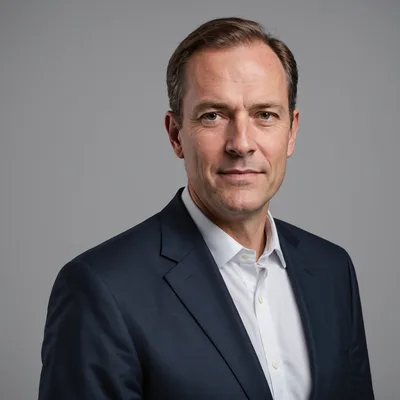
Willem was CTO of a Dutch enterprise security firm — built on a core of network anomaly detection and endpoint telemetry correlation — that was acquired by a US-listed cybersecurity company in 2016. He spent the two years following the acquisition leading EMEA engineering through post-acquisition integration: consolidating product lines, rebuilding the detection pipeline, and managing the friction between an engineering culture built for Dutch enterprise customers and a US parent with global scale ambitions.
That experience shaped the founding thesis for Stroom Capital directly. The acquisition process showed him exactly which European security companies were architecturally differentiated versus which were operationally credible but technically hollow under scrutiny. He founded Stroom Capital in 2018 with one conviction: the next generation of security infrastructure would be AI-native from the ground up, and the European market — governed by GDPR, shaped by NIS2, and now under DORA — would produce founders with the most defensible regulatory moats.
Willem leads all three funds and manages LP relationships. He chairs the boards of EclecticIQ and Detectify, and serves as observer at Hadrian. His diligence process begins with the threat model: he evaluates whether the underlying detection or enforcement architecture is correct before he considers commercial traction. He is not interested in security companies that are essentially workflow tools with a security badge.

Martijn spent twelve years in information security consulting and red-team operations, the bulk of it across European financial services institutions — banks, insurance groups, and payment processors where the consequence of a successful intrusion is measured in regulatory exposure and counterparty trust, not just remediation cost. He ran adversarial simulation engagements: assume-breach exercises, purple team operations, and architecture reviews where the goal was identifying the paths an attacker would actually take, not the paths the defensive tooling was watching.
He joined Stroom as General Partner in 2020 to lead technical diligence. The diligence process he runs is adversarial by design: he approaches a founder's claimed threat model the same way he approached a client's network — looking for the gap between what the system claims to detect and what it would actually miss. Every portfolio company's architecture has been reviewed by Martijn before investment. Post-close, he remains available to portfolio engineering teams as a resource for architecture decisions, not just as a board presence.
Martijn manages Fund II and Fund III deployment and holds board or observer positions at Hadrian, Eye Security, Orbit Security, and Sequretek. His writing on red team thinking applied to venture diligence, zero-trust architecture, and the convergence of AI and cybersecurity has articulated much of Stroom's public investment thesis.
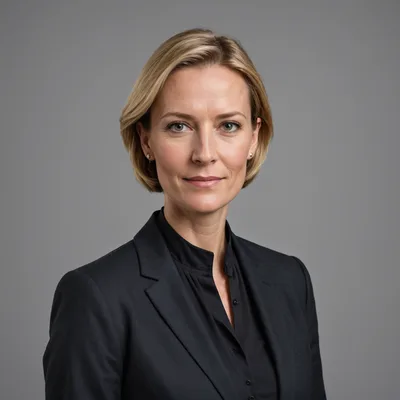
Before joining Stroom, Ilse was a product manager at an early-stage identity verification company that grew into a well-capitalised scale-up. She shipped a biometric liveness detection product — the core anti-spoofing layer that distinguishes a live face from a photograph or a deepfake — that reached 10 million monthly verifications. That work required navigating both the engineering constraints of real-time ML inference on mobile devices and the regulatory requirements of GDPR Article 9 (biometric data as a special category) and eIDAS level-of-assurance frameworks simultaneously.
She joined Stroom in 2023 to cover early-stage deals in digital trust and identity infrastructure, bringing product and technical credibility to a part of the market where most investors can assess commercial traction but few can evaluate whether the underlying identity architecture will hold under adversarial conditions or regulatory scrutiny. She is the first call for founders navigating the identity-adjacent implications of the AI Act, eIDAS 2.0, and the EU Digital Identity Wallet rollout.
Ilse leads sourcing and diligence for Fund III investments in identity, zero-knowledge compliance, and developer-first security. She holds observer positions at Sprinto and Aikido Security, and has written extensively on how the identity layer is being rebuilt for the AI era — where the question is not just "who is this person" but "what can this agent be authorised to do on their behalf."
How we work with founders.
We come from engineering. We have written the detection rules, run the red teams, shipped the product under a compliance deadline, and managed the post-acquisition chaos. We take board seats when the access adds genuine value to the company — and we stay out of the operational detail when it doesn't. We answer the late-night message about an architectural decision because we have sent it ourselves.
Stroom Capital exists because we believe European security founders deserve investors who understand their technical problem — not just their market size. Our diligence is rigorous because we know what correct security architecture looks like. Our post-investment engagement is substantive because we have been in the position our founders are in: choosing between the correct implementation and the shippable one, and knowing which corners cannot be cut.
We are a small firm by design. Three partners, active across thirteen cap tables. We do not scale headcount ahead of conviction. We do not lead rounds in categories we have not personally operated in. And we do not pretend that understanding a security company's business model is the same as understanding its security model.